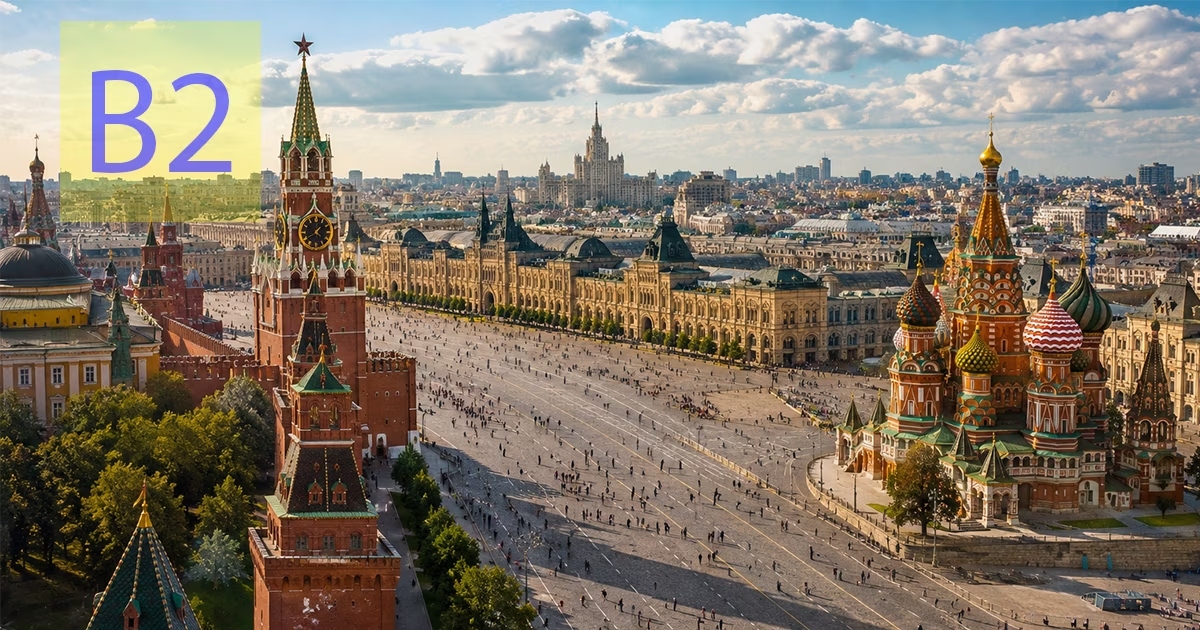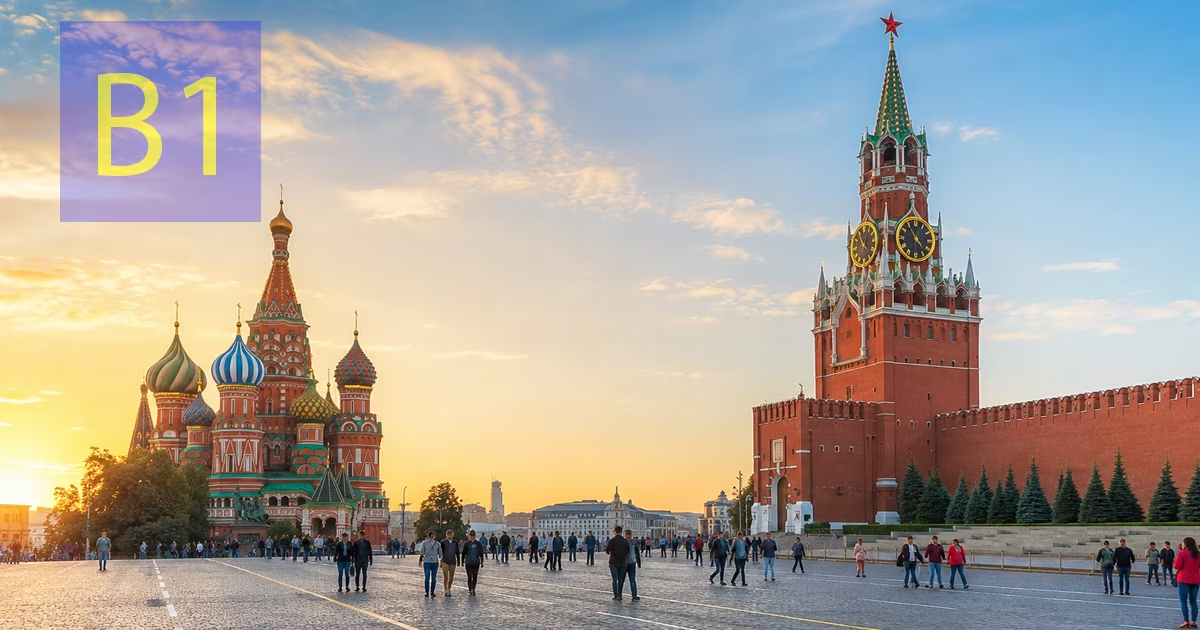
Красную площадь часто называют самым центром Москвы. Многие знают, что слово «красная» в старом русском языке означало «красивая». Поэтому название площади связывают не только с цветом, но и с красотой. Однако такое название появилось не сразу, а только в середине XVII века по царскому указу. До этого площадь называли «Пожар», потому что старая Москва была деревянной и часто горела. Когда к городу приближались враги, начинались сильные пожары. Огонь появлялся около Кремля, горели дома, улицы, деревянный Кремль и почти вся Москва.
Red Square is often called the very center of Moscow. Many people know that the word “red” in Old Russian meant “beautiful”. Therefore, the name of the square is connected not only with color, but also with beauty. However, this name did not appear immediately, but only in the middle of the seventeenth century by tsarist decree. Before this, the square was called “Fire”, because old Moscow was wooden and often burned. When enemies approached the city, strong fires began. Fire appeared near the Kremlin, houses, streets, the wooden Kremlin, and almost all of Moscow burned.
Есть и другое объяснение названия. Некоторые люди считают, что слово «красная» может напоминать о крови, потому что на этой площади в разные времена было пролито немало крови. Здесь проходили сражения с врагами, здесь наказывали бунтовщиков, преступников и воров. На Красной площади есть Лобное место, которое часто связывают с казнями. Но интересно, что на самом Лобном месте людей почти никогда не казнили. Отсюда глашатаи читали царские указы, а цари через эти указы обращались к простому народу и сообщали ему свои решения.
There is also another explanation of the name. Some people think that the word “red” may remind one of blood, because on this square, at different times, no small amount of blood was shed. Battles with enemies took place here, rebels, criminals, and thieves were punished here. On Red Square there is Lobnoye Mesto, which is often connected with executions. But it is interesting that people were almost never executed on Lobnoye Mesto itself. From here, heralds read tsarist decrees, and through these decrees the tsars addressed the common people and told them their decisions.
В 1611 году в России было трудное время. В стране не было законного царя, а враги хотели захватить Москву и посадить на трон своего правителя. Тогда гражданин Минин и князь Пожарский вышли на Красную площадь и обратились к народу. Они призвали людей собрать деньги и создать народное войско, чтобы защитить и освободить Москву. Позже Минин и Пожарский стали народными героями. В 1818 году в самом центре Красной площади им поставили памятник. Это был первый скульптурный памятник в Москве.
In 1611, there was a difficult time in Russia. The country did not have a lawful tsar, and enemies wanted to capture Moscow and place their own ruler on the throne. Then the citizen Minin and Prince Pozharsky came out onto Red Square and addressed the people. They called on people to collect money and create a people’s army in order to defend and liberate Moscow. Later Minin and Pozharsky became national heroes. In 1818, a monument to them was put up in the very center of Red Square. This was the first sculptural monument in Moscow.
Памятник Минину и Пожарскому стоял в центре площади до 1924 года. Говорят, что он мешал проводить парады, поэтому его перенесли ближе к Покровскому собору. Этот собор больше известен как собор Василия Блаженного. Его построили в 1552 году, во время правления царя Ивана Грозного, в честь победы над Казанью. Сначала собор был построен из белого камня и состоял из девяти церквей с золотыми куполами. К сожалению, его первоначальный вид не сохранился, но и сегодня он остаётся одним из самых красивых соборов Москвы.
The monument to Minin and Pozharsky stood in the center of the square until 1924. They say that it interfered with holding parades, so it was moved closer to Pokrovsky Cathedral. This cathedral is better known as the Cathedral of Vasily the Blessed. It was built in 1552, during the reign of Tsar Ivan the Terrible, in honor of the victory over Kazan. At first the cathedral was built of white stone and consisted of nine churches with golden domes. Unfortunately, its original appearance has not been preserved, but even today it remains one of the most beautiful cathedrals of Moscow.
На другой стороне Красной площади, напротив собора Василия Блаженного, находится Исторический музей. В нём хранятся важные памятники русской истории и культуры. Его адрес — Красная площадь, дом один. Раньше на этом месте находились старая китайская аптека и китайский ресторан, где, как говорят, часто обедал сам Пётр Первый. Позже в этом здании размещался Московский университет, открытый в 1755 году. Тогда в университете было всего три факультета: философский, юридический и медицинский. А в семидесятые годы XIX века здесь построили новое здание музея.
On the other side of Red Square, opposite the Cathedral of Vasily the Blessed, is the Historical Museum. Important monuments of Russian history and culture are kept in it. Its address is Red Square, building one. Earlier, on this place there were an old Chinese pharmacy and a Chinese restaurant, where, as they say, Peter the First himself often had lunch. Later, Moscow University, opened in 1755, was located in this building. At that time the university had only three faculties: philosophy, law, and medicine. And in the 1870s, a new museum building was built here.
Красная площадь всегда была не только историческим, но и торговым местом. Как и на других главных площадях больших городов, здесь с давних времён шла торговля. Уже в 1520 году на площади построили каменный Гостиный двор, где можно было купить почти всё необходимое. Но товарами торговали не только там. Купцы стояли по всей площади: от Гостиного двора до кремлёвских стен, а также вокруг собора Василия Блаженного. Сегодня на месте старых торговых рядов находится ГУМ — один из самых больших и известных магазинов Москвы.
Red Square was always not only a historical place, but also a trading place. As on other main squares of large cities, trade had been going on here since ancient times. Already in 1520, a stone Gostiny Dvor was built on the square, where one could buy almost everything necessary. But goods were sold not only there. Merchants stood all over the square: from Gostiny Dvor to the Kremlin walls, and also around the Cathedral of Vasily the Blessed. Today, on the site of the old trading rows, there is GUM — one of the largest and best-known stores in Moscow.
На Красной площади всегда отмечали важные праздники и великие победы страны. Здесь проходили парады, демонстрации и торжественные события. Поэтому со временем слово «красная» получило ещё одно значение: оно стало означать праздничная и парадная. С 1918 по 1990 год на Красной площади прошло 120 парадов. Два из них люди помнят особенно хорошо. Первый состоялся 7 ноября 1941 года, когда шла война и враг стоял у Москвы. Солдаты прямо с площади уходили защищать столицу, и многие из них погибли в боях под Москвой.
On Red Square, important holidays and great victories of the country were always celebrated. Parades, demonstrations, and solemn events took place here. Therefore, over time, the word “red” received one more meaning: it began to mean festive and ceremonial. From 1918 to 1990, 120 parades took place on Red Square. People remember two of them especially well. The first took place on November 7, 1941, when the war was going on and the enemy stood near Moscow. Soldiers went straight from the square to defend the capital, and many of them died in the battles near Moscow.
Второй знаменитый парад — это Парад Победы 24 июня 1945 года. В этот день страна праздновала победу над фашистской Германией. Позже, в апреле 1961 года, Красная площадь снова стала местом радости и гордости. Здесь вся страна встречала первого в мире космонавта Юрия Алексеевича Гагарина. Люди приходили с улыбками, весенними цветами и огромным желанием увидеть человека, который первым побывал в космосе. Так площадь снова стала местом, где история страны была видна всем.
The second famous parade was the Victory Parade on June 24, 1945. On this day, the country celebrated victory over fascist Germany. Later, in April 1961, Red Square again became a place of joy and pride. Here the whole country welcomed the world’s first cosmonaut, Yuri Alekseyevich Gagarin. People came with smiles, spring flowers, and a huge desire to see the man who had been the first to go into space. In this way, the square again became a place where the history of the country was visible to everyone.
В последние годы на Красной площади часто проходят концерты известных музыкантов, певцов и артистов. Здесь выступали Мстислав Ростропович, Монсеррат Кабалье, Пол Маккартни и Дмитрий Хворостовский. Красная площадь и сегодня притягивает людей, как магнит. Сюда приходят туристы и москвичи, в праздники и в обычные дни, в солнечную погоду и в непогоду. Люди гуляют, отдыхают, смотрят достопримечательности, делают фотографии и покупают подарки. Поэтому Красная площадь продолжает жить, торговать, праздновать, развлекать и радовать людей.
In recent years, concerts by famous musicians, singers, and performers have often taken place on Red Square. Mstislav Rostropovich, Montserrat Caballé, Paul McCartney, and Dmitri Hvorostovsky have performed here. Red Square still attracts people today, like a magnet. Tourists and Muscovites come here, on holidays and on ordinary days, in sunny weather and in bad weather. People walk, rest, look at the sights, take photographs, and buy gifts. Therefore, Red Square continues to live, trade, celebrate, entertain, and bring joy to people.