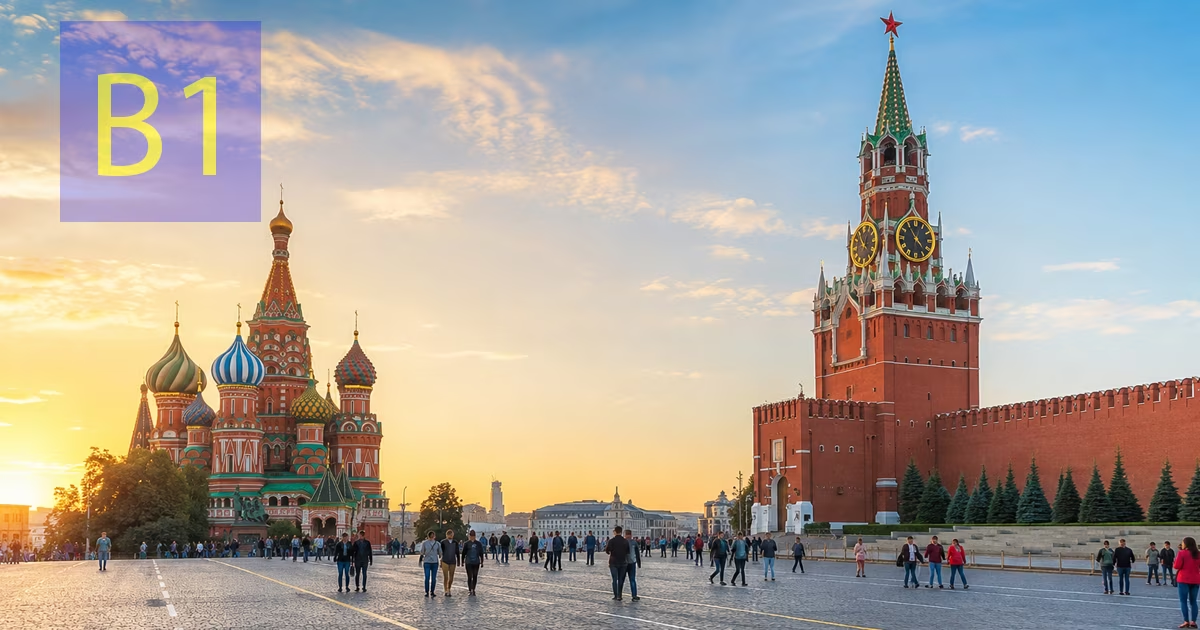
Кра́сную пло́щадь ча́сто называ́ют са́мым це́нтром Москвы́. Мно́гие зна́ют, что сло́во «кра́сная» в ста́ром ру́сском языке́ означа́ло «краси́вая». Поэ́тому назва́ние пло́щади свя́зывают не то́лько с цве́том, но и с красото́й. Одна́ко тако́е назва́ние появи́лось не сра́зу, а то́лько в середи́не XVII ве́ка по ца́рскому ука́зу. До э́того пло́щадь называ́ли «Пожа́р», потому́ что ста́рая Москва́ была́ деревя́нной и ча́сто горе́ла. Когда́ к го́роду приближа́лись враги́, начина́лись си́льные пожа́ры. Ого́нь появля́лся о́коло Кремля́, горе́ли дома́, у́лицы, деревя́нный Кремль и почти́ вся Москва́.
Red Square is often called the very center of Moscow. Many people know that the word “red” in Old Russian meant “beautiful”. Therefore, the name of the square is connected not only with color, but also with beauty. However, this name did not appear immediately, but only in the middle of the seventeenth century by tsarist decree. Before this, the square was called “Fire”, because old Moscow was wooden and often burned. When enemies approached the city, strong fires began. Fire appeared near the Kremlin, houses, streets, the wooden Kremlin, and almost all of Moscow burned.
Есть и друго́е объясне́ние назва́ния. Не́которые лю́ди счита́ют, что сло́во «кра́сная» мо́жет напомина́ть о кро́ви, потому́ что на э́той пло́щади в ра́зные времена́ бы́ло про́лито нема́ло кро́ви. Здесь проходи́ли сраже́ния с врага́ми, здесь нака́зывали бунтовщико́в, престу́пников и воро́в. На Кра́сной пло́щади есть Ло́бное ме́сто, кото́рое ча́сто свя́зывают с ка́знями. Но интере́сно, что на са́мом Ло́бном ме́сте люде́й почти́ никогда́ не казни́ли. Отсю́да глаша́таи чита́ли ца́рские ука́зы, а цари́ че́рез э́ти ука́зы обраща́лись к просто́му наро́ду и сообща́ли ему́ свои́ реше́ния.
There is also another explanation of the name. Some people think that the word “red” may remind one of blood, because on this square, at different times, no small amount of blood was shed. Battles with enemies took place here, rebels, criminals, and thieves were punished here. On Red Square there is Lobnoye Mesto, which is often connected with executions. But it is interesting that people were almost never executed on Lobnoye Mesto itself. From here, heralds read tsarist decrees, and through these decrees the tsars addressed the common people and told them their decisions.
В 1611 году́ в Росси́и бы́ло тру́дное вре́мя. В стране́ не бы́ло зако́нного царя́, а враги́ хоте́ли захвати́ть Москву́ и посади́ть на трон своего́ прави́теля. Тогда́ граждани́н Ми́нин и князь Пожа́рский вы́шли на Кра́сную пло́щадь и обрати́лись к наро́ду. Они́ призва́ли люде́й собра́ть де́ньги и созда́ть наро́дное во́йско, что́бы защити́ть и освободи́ть Москву́. По́зже Ми́нин и Пожа́рский ста́ли наро́дными геро́ями. В 1818 году́ в са́мом це́нтре Кра́сной пло́щади им поста́вили па́мятник. Э́то был пе́рвый скульпту́рный па́мятник в Москве́.
In 1611, there was a difficult time in Russia. The country did not have a lawful tsar, and enemies wanted to capture Moscow and place their own ruler on the throne. Then the citizen Minin and Prince Pozharsky came out onto Red Square and addressed the people. They called on people to collect money and create a people’s army in order to defend and liberate Moscow. Later Minin and Pozharsky became national heroes. In 1818, a monument to them was put up in the very center of Red Square. This was the first sculptural monument in Moscow.
Па́мятник Ми́нину и Пожа́рскому стоя́л в це́нтре пло́щади до 1924 го́да. Говоря́т, что он меша́л проводи́ть пара́ды, поэ́тому его́ перенесли́ бли́же к Покро́вскому собо́ру. Э́тот собо́р бо́льше изве́стен как собо́р Васи́лия Блаже́нного. Его́ постро́или в 1552 году́, во вре́мя правле́ния царя́ Ива́на Гро́зного, в честь побе́ды над Каза́нью. Снача́ла собо́р был постро́ен из бе́лого ка́мня и состоя́л из девяти́ церкве́й с золоты́ми купола́ми. К сожале́нию, его́ первонача́льный вид не сохрани́лся, но и сего́дня он остаётся одни́м из са́мых краси́вых собо́ров Москвы́.
The monument to Minin and Pozharsky stood in the center of the square until 1924. They say that it interfered with holding parades, so it was moved closer to Pokrovsky Cathedral. This cathedral is better known as the Cathedral of Vasily the Blessed. It was built in 1552, during the reign of Tsar Ivan the Terrible, in honor of the victory over Kazan. At first the cathedral was built of white stone and consisted of nine churches with golden domes. Unfortunately, its original appearance has not been preserved, but even today it remains one of the most beautiful cathedrals of Moscow.
На друго́й стороне́ Кра́сной пло́щади, напро́тив собо́ра Васи́лия Блаже́нного, нахо́дится Истори́ческий музе́й. В нём храня́тся ва́жные па́мятники ру́сской исто́рии и культу́ры. Его́ а́дрес — Кра́сная пло́щадь, дом оди́н. Ра́ньше на э́том ме́сте находи́лись ста́рая кита́йская апте́ка и кита́йский рестора́н, где, как говоря́т, ча́сто обе́дал сам Пётр Пе́рвый. По́зже в э́том зда́нии размеща́лся Моско́вский университе́т, откры́тый в 1755 году́. Тогда́ в университе́те бы́ло всего́ три факульте́та: филосо́фский, юриди́ческий и медици́нский. А в семидеся́тые го́ды XIX ве́ка здесь постро́или но́вое зда́ние музе́я.
On the other side of Red Square, opposite the Cathedral of Vasily the Blessed, is the Historical Museum. Important monuments of Russian history and culture are kept in it. Its address is Red Square, building one. Earlier, on this place there were an old Chinese pharmacy and a Chinese restaurant, where, as they say, Peter the First himself often had lunch. Later, Moscow University, opened in 1755, was located in this building. At that time the university had only three faculties: philosophy, law, and medicine. And in the 1870s, a new museum building was built here.
Кра́сная пло́щадь всегда́ была́ не то́лько истори́ческим, но и торго́вым ме́стом. Как и на други́х гла́вных площадя́х больши́х городо́в, здесь с да́вних времён шла торго́вля. У́же в 1520 году́ на пло́щади постро́или ка́менный Гости́ный двор, где мо́жно бы́ло купи́ть почти́ всё необходи́мое. Но това́рами торгова́ли не то́лько там. Купцы́ стоя́ли по всей пло́щади: от Гости́ного двора́ до кремлёвских стен, а та́кже вокру́г собо́ра Васи́лия Блаже́нного. Сего́дня на ме́сте ста́рых торго́вых рядо́в нахо́дится ГУМ — оди́н из са́мых больши́х и изве́стных магази́нов Москвы́.
Red Square was always not only a historical place, but also a trading place. As on other main squares of large cities, trade had been going on here since ancient times. Already in 1520, a stone Gostiny Dvor was built on the square, where one could buy almost everything necessary. But goods were sold not only there. Merchants stood all over the square: from Gostiny Dvor to the Kremlin walls, and also around the Cathedral of Vasily the Blessed. Today, on the site of the old trading rows, there is GUM — one of the largest and best-known stores in Moscow.
На Кра́сной пло́щади всегда́ отмеча́ли ва́жные пра́здники и вели́кие побе́ды страны́. Здесь проходи́ли пара́ды, демонстра́ции и торже́ственные собы́тия. Поэ́тому со вре́менем сло́во «кра́сная» получи́ло ещё одно́ значе́ние: оно́ ста́ло означа́ть пра́здничная и пара́дная. С 1918 по 1990 год на Кра́сной пло́щади прошло́ 120 пара́дов. Два из них лю́ди по́мнят осо́бенно хорошо́. Пе́рвый состоя́лся 7 ноября́ 1941 го́да, когда́ шла война́ и враг стоя́л у Москвы́. Солда́ты пря́мо с пло́щади уходи́ли защища́ть столи́цу, и мно́гие из них поги́бли в боя́х под Москво́й.
On Red Square, important holidays and great victories of the country were always celebrated. Parades, demonstrations, and solemn events took place here. Therefore, over time, the word “red” received one more meaning: it began to mean festive and ceremonial. From 1918 to 1990, 120 parades took place on Red Square. People remember two of them especially well. The first took place on November 7, 1941, when the war was going on and the enemy stood near Moscow. Soldiers went straight from the square to defend the capital, and many of them died in the battles near Moscow.
Второ́й знамени́тый пара́д — э́то Пара́д Побе́ды 24 ию́ня 1945 го́да. В э́тот день страна́ пра́здновала побе́ду над фаши́стской Герма́нией. По́зже, в апре́ле 1961 го́да, Кра́сная пло́щадь сно́ва ста́ла ме́стом ра́дости и го́рдости. Здесь вся страна́ встреча́ла пе́рвого в ми́ре космона́вта Ю́рия Алексе́евича Гага́рина. Лю́ди приходи́ли с улы́бками, весе́нними цвета́ми и огро́мным жела́нием уви́деть челове́ка, кото́рый пе́рвым побыва́л в ко́смосе. Так пло́щадь сно́ва ста́ла ме́стом, где исто́рия страны́ была́ видна́ всем.
The second famous parade was the Victory Parade on June 24, 1945. On this day, the country celebrated victory over fascist Germany. Later, in April 1961, Red Square again became a place of joy and pride. Here the whole country welcomed the world’s first cosmonaut, Yuri Alekseyevich Gagarin. People came with smiles, spring flowers, and a huge desire to see the man who had been the first to go into space. In this way, the square again became a place where the history of the country was visible to everyone.
В после́дние го́ды на Кра́сной пло́щади ча́сто прохо́дят конце́рты изве́стных музыка́нтов, певцо́в и арти́стов. Здесь выступа́ли Мстисла́в Ростропо́вич, Монсерра́т Кабалье́, Пол Макка́ртни и Дми́трий Хворосто́вский. Кра́сная пло́щадь и сего́дня притя́гивает люде́й, как магни́т. Сюда́ прихо́дят тури́сты и москвичи́, в пра́здники и в обы́чные дни, в со́лнечную пого́ду и в непого́ду. Лю́ди гуля́ют, отдыха́ют, смо́трят достопримеча́тельности, де́лают фотогра́фии и покупа́ют пода́рки. Поэ́тому Кра́сная пло́щадь продолжа́ет жить, торгова́ть, пра́здновать, развлека́ть и ра́довать люде́й.
In recent years, concerts by famous musicians, singers, and performers have often taken place on Red Square. Mstislav Rostropovich, Montserrat Caballé, Paul McCartney, and Dmitri Hvorostovsky have performed here. Red Square still attracts people today, like a magnet. Tourists and Muscovites come here, on holidays and on ordinary days, in sunny weather and in bad weather. People walk, rest, look at the sights, take photographs, and buy gifts. Therefore, Red Square continues to live, trade, celebrate, entertain, and bring joy to people.