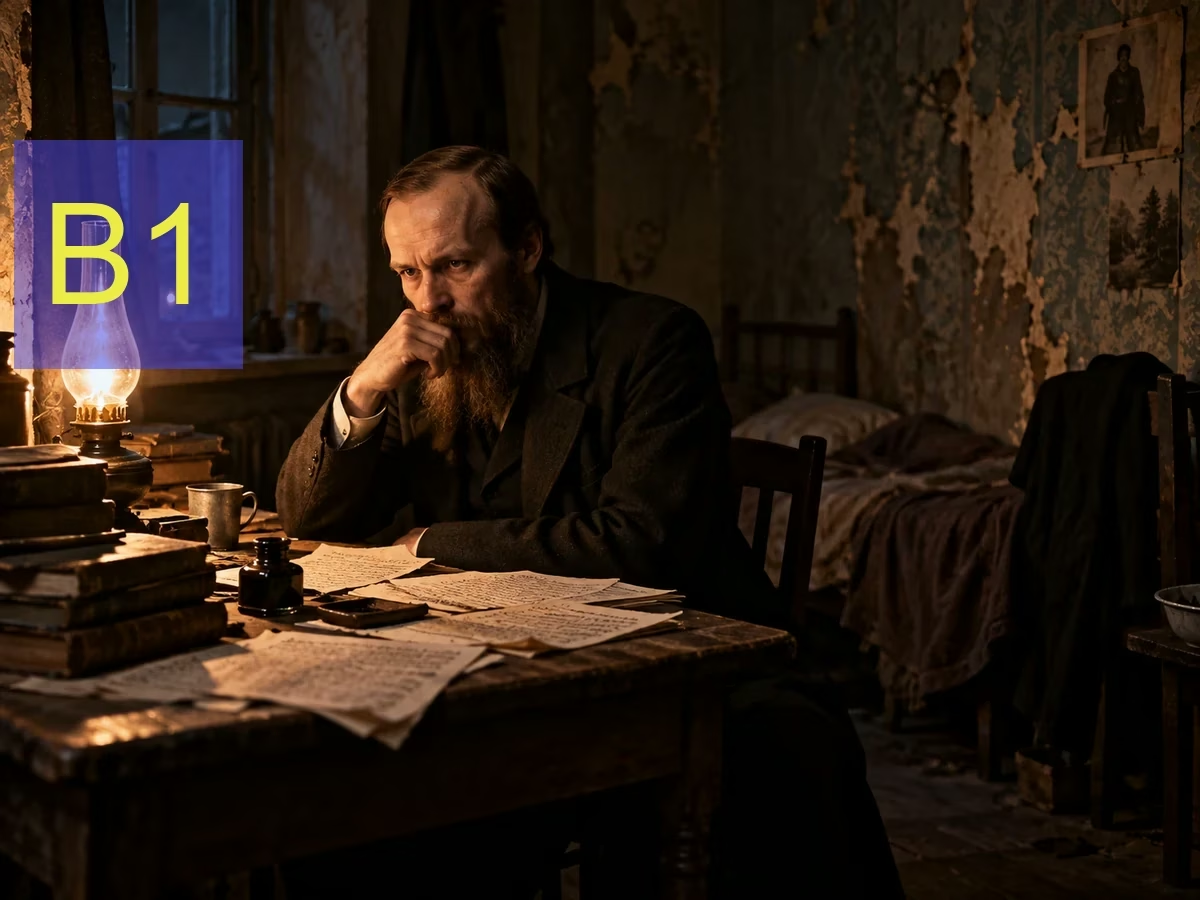
Фёдор Михайлович Достоевский родился в 1821 году в Москве. Его отец был дворянином и работал врачом в больнице для бедных. Сначала Фёдор учился в частном пансионе, потом окончил Главное военно-инженерное училище в Петербурге. Но военная служба ему не нравилась. Поэтому в 1844 году он ушёл в отставку. Он отказался от прав на имения, которые купил его отец, и решил стать писателем. С этого времени Достоевский хотел жить на деньги, которые получал за свои литературные работы.
Fyodor Mikhailovich Dostoevsky was born in 1821 in Moscow. His father was a nobleman and worked as a doctor in a hospital for the poor. At first Fyodor studied at a private boarding school, then graduated from the Main Military Engineering School in St Petersburg. But he did not like military service. Therefore, in 1844 he resigned. He gave up his rights to the estates that his father had bought and decided to become a writer. From that time on, Dostoevsky wanted to live on the money he received for his literary works.
В 1846 году вышел первый роман Достоевского «Бедные люди». Он был написан в форме писем между героями. Читатели приняли книгу очень хорошо. Среди них были Н.А. Некрасов и В.Г. Белинский. Главный герой, Макар Девушкин, был бедным мелким чиновником. Он стал одним из первых «маленьких людей» в книгах писателя. Достоевского интересовало, что чувствуют бедные люди, почему они часто не борются с трудной жизнью и какие мысли скрывают. Эта тема осталась важной и в других произведениях 1840-х годов.
In 1846, Dostoevsky's first novel, "Poor Folk", was published. It was written in the form of letters between the characters. Readers received the book very well. Among them were N. A. Nekrasov and V. G. Belinsky. The main character, Makar Devushkin, was a poor minor civil servant. He became one of the first "little people" in the writer's books. Dostoevsky was interested in what poor people feel, why they often do not fight against a difficult life, and what thoughts they hide. This theme remained important in his other works of the 1840s.
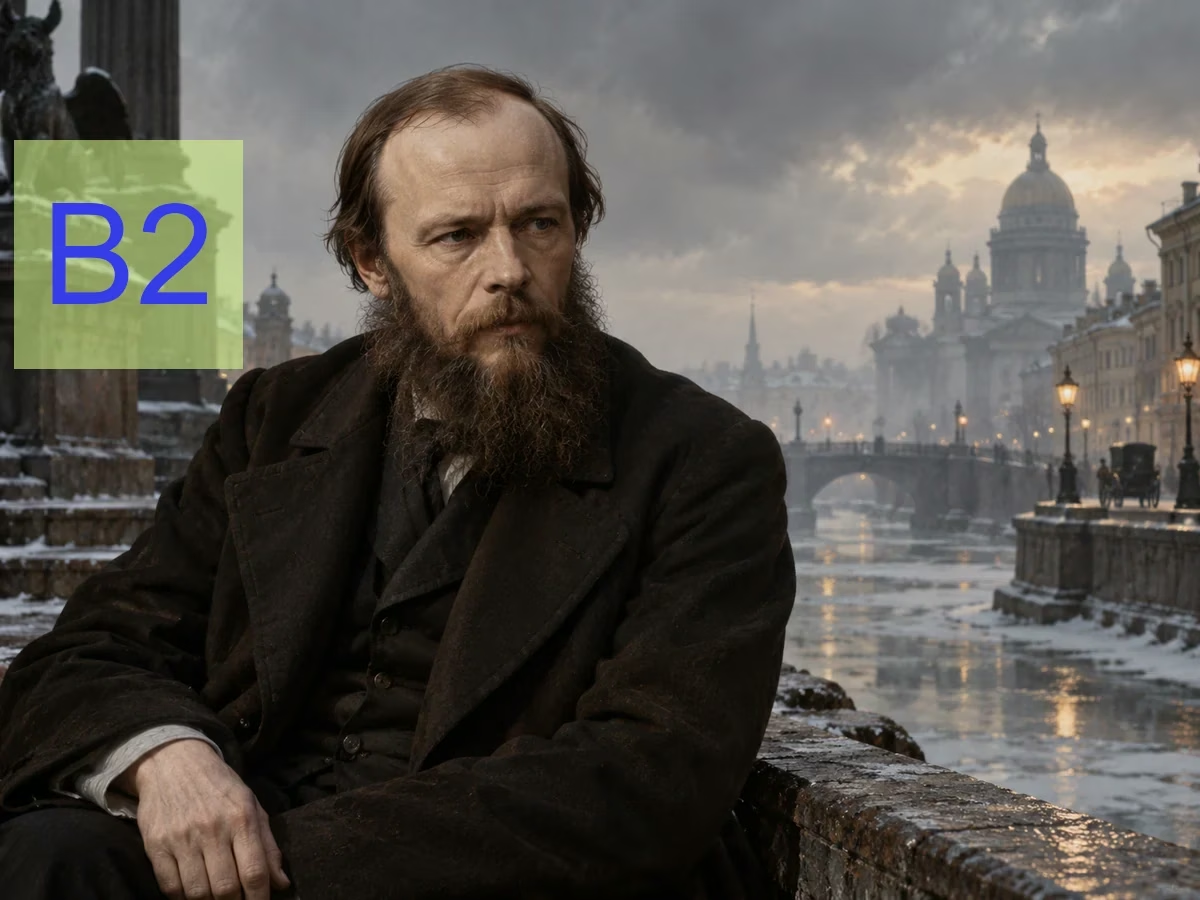
В ранних произведениях важную роль играет и Петербург. У Достоевского это странный и таинственный город. Иногда кажется, что он меняется и обманывает людей, которые там живут. Позже такой образ стали называть Петербургом Достоевского. Писатель также всё больше интересовался мыслями и чувствами человека. В повестях «Двойник», «Хозяйка», «Белые ночи», «Неточка Незванова» и рассказе «Господин Прохарчин» он снова писал о бедных людях, их трудной жизни, страхах, чувствах, внутренних проблемах и сложном выборе.
St Petersburg also plays an important role in the early works. In Dostoevsky's writing, it is a strange and mysterious city. Sometimes it seems that the city changes and deceives the people who live there. Later, this image came to be called Dostoevsky's Petersburg. The writer also became increasingly interested in people's thoughts and feelings. In the novellas "The Double", "The Landlady", "White Nights", "Netochka Nezvanova" and the short story "Mr Prokharchin", he again wrote about poor people, their difficult lives, fears, feelings, inner problems and difficult choices.
В конце 1840-х годов Достоевский начал ходить на встречи кружка М.В. Петрашевского. Там люди обсуждали политику, экономику, философию и идеи утопического социализма. На одной встрече они читали письмо В.Г. Белинского к Н.В. Гоголю, которое было запрещено в России. Вскоре участников кружка арестовали и приговорили к смерти. Но прямо перед казнью им сообщили, что наказание изменили. Достоевского отправили на четыре года в Сибирь на каторгу, а потом он должен был служить простым солдатом.
At the end of the 1840s, Dostoevsky began attending meetings of the circle of M. V. Petrashevsky. There, people discussed politics, economics, philosophy and the ideas of utopian socialism. At one meeting, they read a letter from V. G. Belinsky to N. V. Gogol, which was banned in Russia. Soon the members of the circle were arrested and sentenced to death. But just before the execution, they were told that the punishment had been changed. Dostoevsky was sent to Siberia for four years of hard labor, after which he had to serve as an ordinary soldier.
В январе 1850 года Достоевского привезли в тюрьму в Омске. Позже он называл это место «Мёртвым домом». В тюрьме он провёл четыре года. После этого его отправили солдатом в Семипалатинск. В этот период он написал повести «Село Степанчиково и его обитатели» и «Дядюшкин сон». После смерти Николая I в 1855 году наказание стало легче, и Достоевский получил офицерское звание. В 1859 году он ушёл со службы, переехал сначала в Тверь, а позже снова в Петербург.
In January 1850, Dostoevsky was brought to a prison in Omsk. Later he called this place the "House of the Dead". He spent four years in prison. After that, he was sent to Semipalatinsk as a soldier. During this period, he wrote the novellas "The Village of Stepanchikovo and Its Inhabitants" and "Uncle's Dream". After the death of Nicholas I in 1855, the punishment became less severe, and Dostoevsky received the rank of officer. In 1859, he left the service, moved first to Tver, and later returned to St Petersburg.
После каторги болезнь Достоевского стала сильнее. До конца жизни у него были приступы эпилепсии. В 1861-1862 годах вышла книга «Записки из мёртвого дома» о его жизни на каторге. В 1861 году появился роман «Униженные и оскорблённые». В нём писатель снова рассказывал о судьбе и чувствах «маленького человека». Достоевский также хотел объяснить свои мысли о морали, литературе и политике. Вместе с братом он выпускал журнал «Время», где печатал свои произведения и статьи. Позже он продолжил эту работу в журнале «Эпоха».
After hard labor, Dostoevsky's illness became more severe. He had epileptic seizures until the end of his life. From 1861 to 1862, the book "Notes from the House of the Dead", about his life in hard labor, was published. In 1861, the novel "Humiliated and Insulted" appeared. In it, the writer again told the story of the fate and feelings of the "little man". Dostoevsky also wanted to explain his ideas about morality, literature and politics. Together with his brother, he published the magazine "Time", where he printed his works and articles. Later, he continued this work in the magazine "Epoch".
В это время Достоевский часто писал о страданиях простых людей. Он всё больше связывал эти темы с религией и вопросами о добре и зле. Писатель считал, что русский народ сохранил настоящую веру во Христа и может помочь разным народам жить вместе мирно. Эти идеи называли почвенничеством. Они отличались от взглядов демократической интеллигенции и славянофилов. В 1864 году вышли «Записки из подполья», где герой выбирает между добром и злом. В 1866 году появился роман «Преступление и наказание» о том, имеет ли человек право убить другого.
At this time, Dostoevsky often wrote about the suffering of ordinary people. He increasingly connected these themes with religion and questions about good and evil. The writer believed that the Russian people had preserved true faith in Christ and could help different peoples live together peacefully. These ideas were called pochvennichestvo. They differed from the views of the democratic intelligentsia and the Slavophiles. In 1864, "Notes from Underground" was published, in which the main character chooses between good and evil. In 1866, the novel "Crime and Punishment" appeared, about whether a person has the right to kill another person.
В 1867 году Достоевский женился на Анне Григорьевне Сниткиной. Она работала стенографисткой, а позже стала его близким другом и помощником. В последние годы жизни писатель создал романы «Идиот», «Бесы» и «Братья Карамазовы». В этих книгах он показывал людей, которые думают прежде всего о себе и считают, что им всё разрешено. Такие герои должны решить, где проходит граница между добром и злом. Достоевский писал о преступлении против морали, закона, Бога и других людей. Те же вопросы он обсуждал в книге «Дневник писателя» до конца жизни.
In 1867, Dostoevsky married Anna Grigoryevna Snitkina. She worked as a stenographer and later became his close friend and assistant. In the last years of his life, the writer created the novels "The Idiot", "Demons" and "The Brothers Karamazov". In these books, he portrayed people who think primarily about themselves and believe that everything is permitted to them. Such characters must decide where the boundary between good and evil lies. Dostoevsky wrote about crimes against morality, the law, God and other people. He discussed the same questions in the book "A Writer's Diary" until the end of his life.
Достоевский умер в 1881 году. Его похоронили в Петербурге на кладбище Александро-Невской лавры. Позже он стал классиком русской литературы и одним из самых известных русских писателей на Западе и в Японии. Его книги вошли в школьную программу, а по многим произведениям сняли фильмы. В Москве, Петербурге и Старой Руссе открыли музеи-квартиры писателя. Некоторые названия и выражения из его книг вошли в русский язык, например «административный восторг» и слово «стушеваться». В советское время также использовали отрицательное слово «достоевщина» для его религиозных и моральных тем.
Dostoevsky died in 1881. He was buried in St Petersburg at the cemetery of the Alexander Nevsky Lavra. Later, he became a classic of Russian literature and one of the best-known Russian writers in the West and Japan. His books became part of the school curriculum, and films were made based on many of his works. Museum apartments dedicated to the writer were opened in Moscow, St Petersburg and Staraya Russa. Some names and expressions from his books entered the Russian language, for example "administrative enthusiasm" and the word "stushevatsya". In the Soviet period, the negative word "dostoevshchina" was also used for his religious and moral themes.