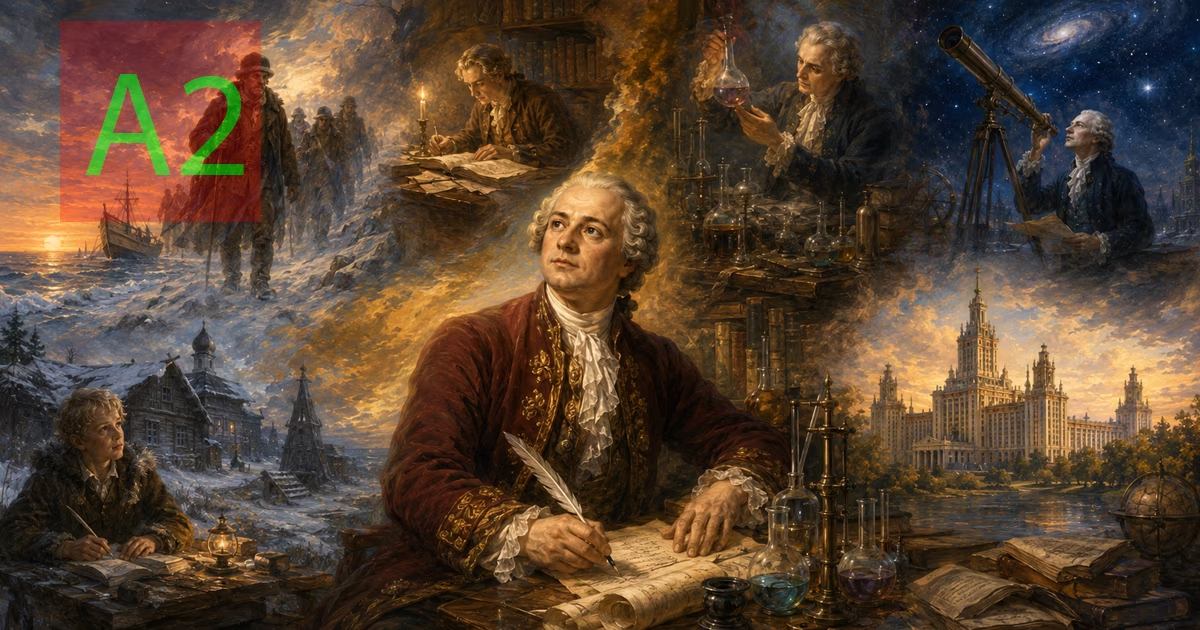
Михаил Васильевич Ломоносов был первым по-настоящему великим русским учёным. Он родился в 1711 году на севере России, в небольшой деревне неподалёку от Белого моря. Его отец был рыбаком и часто надолго уходил в море на промысел. Мать умерла рано, когда Михаилу было девять лет, поэтому его детство оказалось непростым. С ранних лет он помогал отцу, много трудился и привык к холоду, усталости и суровой деревенской жизни. Позднее эта стойкость характера не раз помогала ему в учёбе и научной деятельности.
Mikhail Vasilyevich Lomonosov was the first truly great Russian scientist. He was born in the year 1711 in the north of Russia, in a small village not far from the White Sea. His father was a fisherman and often went away to sea for a long time to fish. His mother died early, when Mikhail was nine years old, so his childhood turned out to be difficult. From early years he helped his father, worked a lot and became used to cold, tiredness and harsh village life. Later this firmness of character helped him more than once in his studies and scientific activity.
С детства Михаил стремился учиться и узнавать новое. Однако в его деревне не было хорошей школы, а детям рыбаков и крестьян было особенно трудно получить образование. Он самостоятельно учился читать и писать, когда появлялась такая возможность. Один сосед дал ему книги по грамматике и арифметике. Эти книги стали для него настоящей ценностью. Михаил перечитывал их много раз и постепенно понял, что знания способны открыть перед ним совсем иную жизнь. С этого времени он начал мечтать о серьёзном образовании.
From childhood Mikhail strove to study and learn new things. However, in his village there was no good school, and it was especially difficult for the children of fishermen and peasants to receive an education. He independently learned to read and write when such an opportunity appeared. One neighbor gave him books on grammar and arithmetic. These books became a real treasure for him. Mikhail reread them many times and gradually understood that knowledge was able to open before him a completely different life. From that time he began to dream of a serious education.
Когда Ломоносову исполнилось девятнадцать лет, он принял решение уехать в Москву, чтобы продолжить учёбу. Его отец не одобрял такого шага. Он хотел, чтобы сын остался дома, стал рыбаком, женился и жил так же, как большинство людей в деревне. Но Михаил мечтал о науке и понимал, что в родных местах не сможет учиться дальше. Поэтому он тайно покинул дом и отправился в далёкий путь. Это решение изменило всю его дальнейшую судьбу. Он не знал, что ждёт его впереди, но был готов идти к цели до конца.
When Lomonosov turned nineteen years old, he made the decision to leave for Moscow in order to continue his studies. His father did not approve of such a step. He wanted his son to stay at home, become a fisherman, marry and live the same way as most people in the village. But Mikhail dreamed of science and understood that in his native places he would not be able to study further. Therefore he secretly left home and set off on a long journey. This decision changed his whole later fate. He did not know what awaited him ahead, but he was ready to go toward his goal to the end.
Путь до Москвы пришёлся на зиму и оказался чрезвычайно тяжёлым. У Ломоносова почти не было денег, еды и тёплой одежды. Он шёл пешком вместе с рыбаками, которые везли рыбу с Белого моря в столицу. Дорога заняла больше месяца. Михаил терпел холод, голод и усталость, но не повернул назад. Его стремление к учёбе было сильнее страха и трудностей, встречавшихся ему на пути. Он верил, что в Москве сумеет начать новую жизнь. Каждый день требовал от него силы, терпения и надежды.
The way to Moscow fell in winter and turned out to be extremely hard. Lomonosov had almost no money, food or warm clothing. He went on foot together with fishermen who were carrying fish from the White Sea to the capital. The road took more than a month. Mikhail endured cold, hunger and tiredness, but did not turn back. His striving for study was stronger than the fear and difficulties that met him on the way. He believed that in Moscow he would be able to begin a new life. Every day required strength, patience and hope from him.
В Москве Ломоносов поступил в Славяно-греко-латинскую академию. Он скрыл, что был сыном рыбака, потому что это могло помешать ему стать учеником. В девятнадцать лет он начал обучение в первом классе вместе с маленькими мальчиками. Некоторые ученики смеялись над ним из-за возраста и бедной одежды. Жизнь в академии была нелёгкой: Михаил часто голодал и жил крайне скромно, но продолжал усердно заниматься. Он не стыдился трудностей и думал прежде всего об учёбе. Даже бедность не смогла остановить его стремление к знаниям.
In Moscow Lomonosov entered the Slavic-Greek-Latin Academy. He hid that he was the son of a fisherman, because this could have prevented him from becoming a student. At nineteen years old he began studying in the first class together with little boys. Some students laughed at him because of his age and poor clothing. Life in the academy was not easy: Mikhail often went hungry and lived extremely modestly, but continued to study diligently. He was not ashamed of difficulties and thought first of all about study. Even poverty could not stop his striving for knowledge.
Ломоносов учился очень быстро и проявлял выдающиеся способности. У него была прекрасная память, твёрдый характер и огромное терпение. За один год он освоил программу нескольких классов, а через три года окончил академию. После этого он продолжил образование в Киеве и Петербурге. Особенно его интересовали химия, математика, физика и астрономия. Он стремился понять, как устроен мир, и поэтому не жалел сил на учёбу. Учителя замечали его талант и уважали его трудолюбие. Он часто занимался больше других учеников и быстро наверстывал программу.
Lomonosov studied very quickly and showed outstanding abilities. He had an excellent memory, a firm character and enormous patience. In one year he mastered the program of several classes, and after three years he finished the academy. After that he continued his education in Kyiv and Petersburg. He was especially interested in chemistry, mathematics, physics and astronomy. He strove to understand how the world was arranged, and therefore did not spare his strength for study. Teachers noticed his talent and respected his diligence. He often studied more than other students and quickly caught up with the program.
В 1736 году Ломоносова вместе с другими лучшими студентами отправили учиться в Германию. В то время в России ещё не было университетов такого уровня, поэтому талантливых молодых людей направляли за границу. В Германии Михаил изучал физику, химию, механику, горное дело и иностранные языки. Он много читал, наблюдал за опытами и работал рядом с учёными. Через несколько лет он вернулся в Россию и начал служить в Академии наук. Там он смог применять полученные знания на практике. Этот опыт сделал его настоящим специалистом европейского уровня.
In the year 1736 Lomonosov, together with other best students, was sent to study in Germany. At that time in Russia there were not yet universities of such a level, therefore talented young people were sent abroad. In Germany Mikhail studied physics, chemistry, mechanics, mining and foreign languages. He read a lot, observed experiments and worked alongside scientists. After several years he returned to Russia and began to serve in the Academy of Sciences. There he was able to apply the knowledge he had received in practice. This experience made him a real specialist of European level.
Ломоносов занимался множеством наук, потому что круг его интересов был необычайно широк. Он был химиком, физиком, математиком, астрономом, геологом, историком и филологом. Он сделал важные открытия в химии и физике, занимался астрономией, географией, горным делом и мореплаванием. Ломоносов создал первую в России химическую лабораторию и сам проводил в ней опыты. В Академии наук он стал первым русским учёным-академиком и многое сделал для развития отечественной науки. Его труд показал, что русская наука может быть сильной и самостоятельной. Многие современники поражались его энергии, знаниям и смелости идей.
Lomonosov engaged in many sciences, because the circle of his interests was unusually wide. He was a chemist, physicist, mathematician, astronomer, geologist, historian and philologist. He made important discoveries in chemistry and physics, and engaged in astronomy, geography, mining and navigation. Lomonosov created the first chemical laboratory in Russia and himself carried out experiments in it. In the Academy of Sciences he became the first Russian scientist-academician and did much for the development of national science. His work showed that Russian science could be strong and independent. Many contemporaries were amazed by his energy, knowledge and boldness of ideas.
Ломоносов был не только учёным, но и писателем, поэтом и переводчиком. Он писал стихи и поэмы, владел несколькими иностранными языками и серьёзно работал над русским литературным языком. Он создал важную грамматику русского языка и способствовал развитию образования в стране. Ломоносов хотел, чтобы в России появлялось больше учёных и школ. В 1755 году он помог основать Московский университет, который сегодня носит его имя. Поэтому его помнят как человека, посвятившего себя науке и России. Его жизнь стала примером того, как образование способно изменить судьбу человека.
Lomonosov was not only a scientist, but also a writer, poet and translator. He wrote verses and poems, knew several foreign languages and worked seriously on the Russian literary language. He created an important grammar of the Russian language and contributed to the development of education in the country. Lomonosov wanted more scientists and schools to appear in Russia. In the year 1755 he helped to found Moscow University, which today bears his name. Therefore he is remembered as a person who devoted himself to science and Russia. His life became an example of how education is able to change a person’s fate.